
-
Thank you for visiting HeavyEquipmentForums.com! Our objective is to provide industry professionals a place to gather to exchange questions, answers and ideas. We welcome you to register using the "Register" icon at the top of the page. We'd appreciate any help you can offer in spreading the word of our new site. The more members that join, the bigger resource for all to enjoy. Thank you!
You are using an out of date browser. It may not display this or other websites correctly.
You should upgrade or use an alternative browser.
You should upgrade or use an alternative browser.
Drilling holes oversize in track shoes
- Thread starter OzDozer
- Start date


LCA078
Senior Member
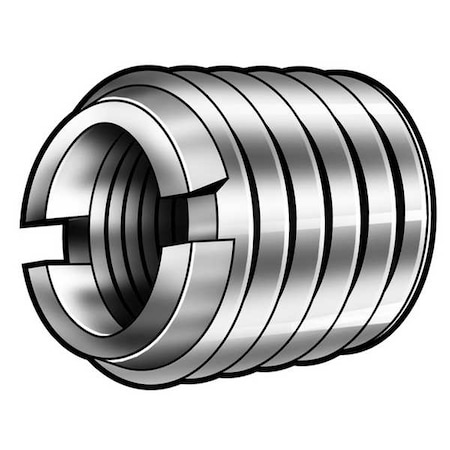
I see most of the ideas are for making the holes in the shoe larger. But what about making the threads in the chain smaller? Like with a threaded insert?
 www.zoro.com
Might have to use a fine thread 1/2 bolt but would any of these inserts be usable?
E-Z Lok Self Locking Thread Insert, 1/2-20 Internal Thread Size, 5/8-11 External Thread Size, 5 PK 319-820 | Zoro
Order E-Z Lok Self Locking Thread Insert, 1/2-20 Internal Thread Size, 5/8-11 External Thread Size, 5 PK, 319-820 at Zoro.com. Great prices & free shipping on orders over $50 when you sign in or sign up for an account.
www.zoro.com
Might have to use a fine thread 1/2 bolt but would any of these inserts be usable?

Welder Dave
Senior Member
The rails/chains aren't threaded. Even if they were drilling them for inserts would weaken them and I doubt the bolts would stay properly torqued. Track bolts take considerably more torque than standard bolts and keeping them tight is paramount. If they come loose and aren't caught right away, it is usually almost impossible to get them to stay tight. Then the pads basically become scrap if you planned to use them when replacing the chains.

Georgia Iron
Senior Member
- Joined
- May 6, 2012
- Messages
- 1,319
- Location
- USA - Georgia
- Occupation
- Concrete building slab and grading contractor
The cheap and easy fix is to torch the holes bigger put in and tighten the bolts. If they get loose tack weld the bolt heads

OzDozer
Senior Member
I like to think we're a bit more professional than that technique. Once you start welding things into position that have to come apart later, you're simply making for higher costs down the line.
Plus, items welded into position, where the design calls for bolts, means that all slight movement flexibility is lost, and you're forever finding those welds are cracking.
Plus, items welded into position, where the design calls for bolts, means that all slight movement flexibility is lost, and you're forever finding those welds are cracking.
Georgia Iron
Senior Member
- Joined
- May 6, 2012
- Messages
- 1,319
- Location
- USA - Georgia
- Occupation
- Concrete building slab and grading contractor
Yes it is a crude way to go but. I don't have the time to have a machine down and out.I like to think we're a bit more professional than that technique. Once you start welding things into position that have to come apart later, you're simply making for higher costs down the line.
Plus, items welded into position, where the design calls for bolts, means that all slight movement flexibility is lost, and you're forever finding those welds are cracking.
All mine are old and most of the bolt heads are worn off and the nut sides are also about ruined. Welding the bolt heads works, they don't come loose or Crack. A lot of old parts have elongated holes so you do what you have to Do.
I have learned that you can't be afraid to use a gas axe and most of the BS about this special metal hardness and that is just that. When in doubt, Double it and then weld it again.
A welding machine is my best friend.
Works for me.
If you don't get them drilled out what is the plan...
Last edited:
Georgia Iron
Senior Member
- Joined
- May 6, 2012
- Messages
- 1,319
- Location
- USA - Georgia
- Occupation
- Concrete building slab and grading contractor
 On a different note, it is opening day of whitetail season here in the south...
I am enjoying not listening to the drone of a diesel engine!
Welder Dave
Senior Member
Torching the holes to fit new rails is a really sloppy way to go about it. You'd also use a considerable amount of oxygen and fuel gas. I think it would be slower than reaming the holes and I'm pretty good with a torch. Welding new bolts is also a pretty redneck way of keeping them tight. From my understanding there isn't a huge rush to get the machine back working. I think OzDozer has the right approach with the Norseman bits designed for enlarging holes. If it was 1 or 2 pads that won't stay tight is one thing but a complete set on both sides using new rails, do it right.
Georgia Iron
Senior Member
- Joined
- May 6, 2012
- Messages
- 1,319
- Location
- USA - Georgia
- Occupation
- Concrete building slab and grading contractor
It's is all going to depend upon those track shoes. If he got a real good set of hardened pads then ... Maybe they are standard made in chi n a cheaper softer metal. Which seems to me what is easier to come across now.
Did they test the pad hardness with a standard hardened drill bit? I have one set of old cat pads that I shot with an armor piercing 556 round and it did not even dimple it..
I know guys that are ruining newer under carraiges and in 2k hours the soft metal is, stretched out and worn down.
I have a mill and I have had my fair share of shattered bits and slightly worn bits. I would probably get the one dull bit with the hardestest set of pads ever made which would take me right back to ground zero or the vise would come loose and I would snap my new bit.
I am patently waiting to hear and see the results he has with those bits.
When all else fails do what you have to, to get it done.
I figure $500 worth of ox/acetylene, $100 in diesel and $100 worth of Welding rods would fix the issue and 3 days of labor. Which means the customer would need to pay at $2500+ to have those pads mounted up. The last set of pads i took off had to have all the bolts cut off. The 1" impact was not up to the challenge. So to me that is a mute point.
Heck we are on page 4 with the best suggestions on hef on how to fix the issue
Did they test the pad hardness with a standard hardened drill bit? I have one set of old cat pads that I shot with an armor piercing 556 round and it did not even dimple it..
I know guys that are ruining newer under carraiges and in 2k hours the soft metal is, stretched out and worn down.
I have a mill and I have had my fair share of shattered bits and slightly worn bits. I would probably get the one dull bit with the hardestest set of pads ever made which would take me right back to ground zero or the vise would come loose and I would snap my new bit.
I am patently waiting to hear and see the results he has with those bits.
When all else fails do what you have to, to get it done.
I figure $500 worth of ox/acetylene, $100 in diesel and $100 worth of Welding rods would fix the issue and 3 days of labor. Which means the customer would need to pay at $2500+ to have those pads mounted up. The last set of pads i took off had to have all the bolts cut off. The 1" impact was not up to the challenge. So to me that is a mute point.
Heck we are on page 4 with the best suggestions on hef on how to fix the issue
Last edited:
OzDozer
Senior Member
These track shoes (there's two different early D4 tractors involved here) are all genuine, original Cat track shoes. We're all basically restorers, this is all genuine antique Cats, no Chinese steel involved.
I have a stack of new Berco D4 track chains that I acquired in a deal, and 2 clients have each purchased a full set of these track chains for their old D4's, so they can get their old Cats back into good operating order.
We've got to wait for 2 weeks for Norseman to get the drills in, the 5/8" drill is not a stock item.
Then they have to get shipped to me down under here, so at least another 2 weeks again.
Plus, we have some delays with new track bolts, there's 2 complete sets of track chains involved, so there's 560 new bolts required as well.
The old bolts are pretty much toast, from what my clients have indicated, and it's rare to be able to save old track bolts.
New bolts and nuts are around AU$2 each, so it's cheaper and easier just torch the old bolts, drill the shoes, and fit new 5/8" bolts.
So as you can see, this isn't an urgent deal that has to be finished yesterday, none of us are in any hurry - and on top of that, I have to readjust the number of track links in the chains, so I'm currently fabricating a 50 tonne portable track press, so I can do that.
By the time the Norseman drills arrive I should have the track press finished, the chains shortened or lengthened to the required number of links, and my clients will then be able to proceed with shoe drilling.
They will each be doing the drilling themselves, it's not economic for either client to send the shoes out to get drilled, nor even fit the bolts - they're both just interested in keeping their track upgrade costs down to realistic levels, and do as much of the work themselves as they can.
The big undercarriage companies here are spoilt, they expect a minimum spend of $10K or $20K per job, because the big mining companies order that level of expenditure here on a daily basis, so little guys like us are a joke to them.
I had a set of good used D7E/D7F/D7G tracks a year or so ago, and the bushings were a little worn, so I enquired about carrying out a pin and bush turn on them.
It took a week to get a reply, and I got quoted AU$11,000 for the P&B turn!! So, essentially, they weren't even interested in the job.
I have a stack of new Berco D4 track chains that I acquired in a deal, and 2 clients have each purchased a full set of these track chains for their old D4's, so they can get their old Cats back into good operating order.
We've got to wait for 2 weeks for Norseman to get the drills in, the 5/8" drill is not a stock item.
Then they have to get shipped to me down under here, so at least another 2 weeks again.
Plus, we have some delays with new track bolts, there's 2 complete sets of track chains involved, so there's 560 new bolts required as well.
The old bolts are pretty much toast, from what my clients have indicated, and it's rare to be able to save old track bolts.
New bolts and nuts are around AU$2 each, so it's cheaper and easier just torch the old bolts, drill the shoes, and fit new 5/8" bolts.
So as you can see, this isn't an urgent deal that has to be finished yesterday, none of us are in any hurry - and on top of that, I have to readjust the number of track links in the chains, so I'm currently fabricating a 50 tonne portable track press, so I can do that.
By the time the Norseman drills arrive I should have the track press finished, the chains shortened or lengthened to the required number of links, and my clients will then be able to proceed with shoe drilling.
They will each be doing the drilling themselves, it's not economic for either client to send the shoes out to get drilled, nor even fit the bolts - they're both just interested in keeping their track upgrade costs down to realistic levels, and do as much of the work themselves as they can.
The big undercarriage companies here are spoilt, they expect a minimum spend of $10K or $20K per job, because the big mining companies order that level of expenditure here on a daily basis, so little guys like us are a joke to them.
I had a set of good used D7E/D7F/D7G tracks a year or so ago, and the bushings were a little worn, so I enquired about carrying out a pin and bush turn on them.
It took a week to get a reply, and I got quoted AU$11,000 for the P&B turn!! So, essentially, they weren't even interested in the job.
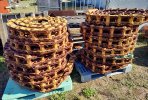
Attachments
Georgia Iron
Senior Member
- Joined
- May 6, 2012
- Messages
- 1,319
- Location
- USA - Georgia
- Occupation
- Concrete building slab and grading contractor
Here is another thought a good friend of mine has a plasma table. He cuts serrations in motor grade blades for me. The machine indexs itself to the part and can follow a curved blade. He makes a CAD file and then it just repeats itself and it does not matter where the part is on the table once the sensor finds the corner.
If the bits don't work out. You could look for a shop that has a laser or plasma table. I know if I were doing it not in the field with a oxy/acy torch, I would either do that or use my hand plasma torch. They charge me $10.00 per blade to do repeat cuts. And it cuts a pretty nice slot.
Right now I am working on a rural track that is a 160 miles out from me and I have to fix everything I can on site... it is a pia
If the bits don't work out. You could look for a shop that has a laser or plasma table. I know if I were doing it not in the field with a oxy/acy torch, I would either do that or use my hand plasma torch. They charge me $10.00 per blade to do repeat cuts. And it cuts a pretty nice slot.
Right now I am working on a rural track that is a 160 miles out from me and I have to fix everything I can on site... it is a pia
Welder Dave
Senior Member
If the pads are hard to drill then you could try annealing the edges of the holes by heating them red hot and letting them cool before drilling. Pads are harder steel but they're also weldable so annealing should work if required. Hard cutting edges are drilled easier by annealing. I think with a good drilling lubricant and the right speed the Norseman drills will work. Better to be liberal with the lubricant so the bits aren't run dry. That's where the wax/stick type lube would be an advantage. If you can't find the wax type putting the liquid type in a pump oil can would be the next best option. Using a drill press would allow for keeping the bit well lubed.
The bolt heads have to be cut off it will heat the plate enough anyway .If the pads are hard to drill then you could try annealing the edges of the holes by heating them red hot and letting them cool before drilling. Pads are harder steel but they're also weldable so annealing should work if required. Hard cutting edges are drilled easier by annealing. I think with a good drilling lubricant and the right speed the Norseman drills will work. Better to be liberal with the lubricant so the bits aren't run dry. That's where the wax/stick type lube would be an advantage. If you can't find the wax type putting the liquid type in a pump oil can would be the next best option. Using a drill press would allow for keeping the bit well lubed.
Georgia Iron
Senior Member
- Joined
- May 6, 2012
- Messages
- 1,319
- Location
- USA - Georgia
- Occupation
- Concrete building slab and grading contractor
The norsemen holehogs, have a minimum starting hole size for 5/8's of 25/64. So if I read your post correctly you are starting with a 1/2 which should be good to go.

OzDozer
Senior Member
The track shoes planned to be drilled use 1/2" bolts, so no problem as regards the minimum starting hole size.
Early Cat D4's used 1/2" track shoe bolts, then Cat went to 9/16" track shoes bolts in the 1960's, and then upsized again to 5/8" bolts around the 1970's.
New D4 track chains with 1/2" track shoe holes are obsolete, track chains with 9/16" holes are hard to find, track chains with 5/8" holes are the most common variety.
Cat have been building D4's since 1937 and the track pitch has never changed from 6 3/4", nor did the track shoe bolt pattern change.
All that changed on the track chains over the decades was the track shoe bolt hole size, the height of the rail, and the depth of rail hardness. Cat improved their rail hardening depth ability over the decades.
The old D4's these guys own have quite satisfactory condition track shoes, so it makes sense to re-use their old shoes. There is very little available here by way of good used undercarriage for older tractors.
Early Cat D4's used 1/2" track shoe bolts, then Cat went to 9/16" track shoes bolts in the 1960's, and then upsized again to 5/8" bolts around the 1970's.
New D4 track chains with 1/2" track shoe holes are obsolete, track chains with 9/16" holes are hard to find, track chains with 5/8" holes are the most common variety.
Cat have been building D4's since 1937 and the track pitch has never changed from 6 3/4", nor did the track shoe bolt pattern change.
All that changed on the track chains over the decades was the track shoe bolt hole size, the height of the rail, and the depth of rail hardness. Cat improved their rail hardening depth ability over the decades.
The old D4's these guys own have quite satisfactory condition track shoes, so it makes sense to re-use their old shoes. There is very little available here by way of good used undercarriage for older tractors.
akajun
Member
If he has a plasma shop or water jet shop nearby, simply bring them by for that, they will make a jig and pop them out in less than a minute each. That said if there isn't he may still be in business if he/ you knows how to do precision layout and make a jig and has a handheld plasma cutter.
Take your plasma cutter, measure the head, and figure out what size hole you need to stick it in to cut a 5/8' circle. then layout your plate and drill/machine your plate to four holes that diameter. place plate on the track plate, and burn them out. You may need to clean a little slag out with a stone but will be way faster than drilling and or boring and cheaper. Everyone says use a carbide drill but unless you have a very rigid machine and vise, your gonna chip that carbide. I have a knee mill and I wouldnt do it on that, this is large ass drill press with mechanical downfeed territory. If tracks are 50-55, your cobalt drill is not gonna touch them.
Take your plasma cutter, measure the head, and figure out what size hole you need to stick it in to cut a 5/8' circle. then layout your plate and drill/machine your plate to four holes that diameter. place plate on the track plate, and burn them out. You may need to clean a little slag out with a stone but will be way faster than drilling and or boring and cheaper. Everyone says use a carbide drill but unless you have a very rigid machine and vise, your gonna chip that carbide. I have a knee mill and I wouldnt do it on that, this is large ass drill press with mechanical downfeed territory. If tracks are 50-55, your cobalt drill is not gonna touch them.
Welder Dave
Senior Member
He's already decided what he's going to try. A shop would charge plenty if they had to make a jig and man handle each pad a few times. Hand cutting them with a plasma torch would be a pain in my opinion. I'd prefer a standard cutting torch over a plasma torch because you can see a lot better but would still be a pain with 144 holes. Waiting to hear how he's making out.
OzDozer
Senior Member
As I understand it, Cat say in the original specs for the grousers that they're around 52Rc. But I don't believe the metal in the shoe around the hole area is anywhere near that hard.
I've spoken to the owner of one of the old (1960's) D4C's who's on the station (ranch) and he told me he'd already been drilling some of the shoes with a carbide drill (in a simple drill press), and it was working O.K., but it was slow, and the carbide needing resharpening pretty regularly.
He expressed great interest in, and got me to get him, a couple of the Norseman drills. As I think I've mentioned previously, the Norseman drills are designed specifically for hole enlargement.
The problem we're having at present is the 5/8" size drill is not regularly stocked by the reseller, and they're having to wait until the factory do a production run.
That was supposed to be a couple of weeks ago, but the deadline passed, and the advice then was, the production run had been delayed. So, we're just sitting on our hands waiting for Norseman to get their act together.
As previously mentioned, this guy is in a remote location. Think of the most remote location in the continental U.S., then add a lot more miles to reach civilisation.
He doesn't have anything like a waterjet cutter within probably 500 miles of his location, and any shop with plasma isn't much closer, either.
I recently had some contact with a waterjet cutter in the city, when I wanted to cut the 50mm (2") plate for my track pin press. They claimed they could only get within 5mm accuracy (approx. 0.2").
On my larger 50mm plates, that wasn't a concern to me, but on a hole enlarging project where we're going from 1/2" to 5/8", with a substantial degree of repeatable accuracy required for a tight fit for the track shoe bolts, I can't see where the waterjet accuracy would be good enough.
On top of that, the waterjet cutters wanted a CAD file - and all I had was a cardboard template, being "old school".
I wasn't about to invest in CAD file programs and getting taught how to use them, just to cut a couple of pieces of plate! I'm an old dog, and I can't be taught too many new tricks.
The waterjet cutters certainly weren't interested in converting my template to a CAD file, they obviously saw zero profit in a "handyman" job - and rightfully so.
All the plasma cutting I've seen, has had a substantial error margin in the work, far more than a drill.
So I can see the Norseman drills being the only suitable simple solution at this point, purely because of economics, remoteness and a lack of "developed" facilities, and because the Norseman drills are something the station owner and his employees can use with their current equipment.
I've spoken to the owner of one of the old (1960's) D4C's who's on the station (ranch) and he told me he'd already been drilling some of the shoes with a carbide drill (in a simple drill press), and it was working O.K., but it was slow, and the carbide needing resharpening pretty regularly.
He expressed great interest in, and got me to get him, a couple of the Norseman drills. As I think I've mentioned previously, the Norseman drills are designed specifically for hole enlargement.
The problem we're having at present is the 5/8" size drill is not regularly stocked by the reseller, and they're having to wait until the factory do a production run.
That was supposed to be a couple of weeks ago, but the deadline passed, and the advice then was, the production run had been delayed. So, we're just sitting on our hands waiting for Norseman to get their act together.
As previously mentioned, this guy is in a remote location. Think of the most remote location in the continental U.S., then add a lot more miles to reach civilisation.
He doesn't have anything like a waterjet cutter within probably 500 miles of his location, and any shop with plasma isn't much closer, either.
I recently had some contact with a waterjet cutter in the city, when I wanted to cut the 50mm (2") plate for my track pin press. They claimed they could only get within 5mm accuracy (approx. 0.2").
On my larger 50mm plates, that wasn't a concern to me, but on a hole enlarging project where we're going from 1/2" to 5/8", with a substantial degree of repeatable accuracy required for a tight fit for the track shoe bolts, I can't see where the waterjet accuracy would be good enough.
On top of that, the waterjet cutters wanted a CAD file - and all I had was a cardboard template, being "old school".
I wasn't about to invest in CAD file programs and getting taught how to use them, just to cut a couple of pieces of plate! I'm an old dog, and I can't be taught too many new tricks.
The waterjet cutters certainly weren't interested in converting my template to a CAD file, they obviously saw zero profit in a "handyman" job - and rightfully so.
All the plasma cutting I've seen, has had a substantial error margin in the work, far more than a drill.
So I can see the Norseman drills being the only suitable simple solution at this point, purely because of economics, remoteness and a lack of "developed" facilities, and because the Norseman drills are something the station owner and his employees can use with their current equipment.
Welder Dave
Senior Member
Hopefully you'll get the Norseman drills soon.
OzDozer
Senior Member
Dave - Yes, we're looking good at this point - another member of HEF has messaged me to say he's found 2 in KS and he's happy to purchase them and forward them to me. Just have to confirm they do actually have the 2 in stock.