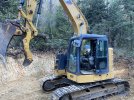
How much road do you have? We do a lot of what you're doing, though we are prepping the roads for logging which usually includes adding rock. Depending on the situation, we'll use a dozer, excavator or grader or a combination or all three if it's a big enough job, but the excavator is the main tool. Often the roads haven't been used since the last time it was logged and they're covered in 40 years of organic matter. The excavator is the most versatile but can be the slowest if you're mostly cleaning the road surface off. With a tilting bucket you can put in a nice V-ditch in a narrow right of way and not cut the crown off if you're scraping junk off the road. Or if you can turn the bucket around backward you can do a lot of ditching with a 5' smooth bucket working 90 degrees to the road but it's not as fast. But bucket shape is important if you go the tilting route. I can expand later if you wish. The dozer will ditch and scrape though it's not as fast or clean as a grader but will work in wet conditions. The grader will ditch, scrape and grade the fastest but is limited by ground conditions and can't do a lot about brush unless it's growing close to the road. If you don't have a bank to blow the material over, then you're in for a lot of tedious pushing it down the road or ditch until you do in which case the excavator shines. If the road is overgrown, then the excavator is the ticket. I'd say unless you are building roads you don't really need the dozer and since you already have an excavator, get a tilting bucket first if you have a circuit to run it. Then get a grader, preferably articulating if you feel you need something more.
Even if you are building roads, you can do a lot with your excavator alone and if you have a grader, you can finish it off with it. This summer I built some spurs with a Cat 143H grader because the D6N that was supposed to go to the job was down for repair longer than expected. The excavator, a Cat 316, dug the stumps, cleared the right of way and put in a few of the culverts before he had to move on to the next job and then I cut in the grades down a sidehill. One I had to fill the bottom of the hill to get it down to 15% which would have been faster with the D6 but I got it done. I crowned the subgrade, sloped the banks and cut in the ditches. Then I had to bring a backhoe to put in one culvert that had to wait until the grade was finished. I'm kicking myself for not getting any pictures because it turned out really nice!
Anyways, the upshot is you can get the job done with whatever you end up buying, just might have to approach it differently. Hopefully this gives you something to chew on.