• Thank you for visiting HeavyEquipmentForums.com! Our objective is to provide industry professionals a place to gather to exchange questions, answers and ideas. We welcome you to register using the "Register" icon at the top of the page. We'd appreciate any help you can offer in spreading the word of our new site. The more members that join, the bigger resource for all to enjoy. Thank you!
Joined
Oct 16, 2025
Messages
9
Location
Aurora, IL
We’ve been reviewing maintenance costs at our Aurora plant and found something that made everyone laugh at first and groan right after. Squirrel damage. Between chewing wires and nesting in warm spots near motors, they’ve actually added thousands of dollars to repairs this year.

I’m curious how other shops or plants handle things like that. Do you budget for random “acts of nature,” or just deal with it as it comes up?
 

Vetech63

Senior Member
Joined
Aug 10, 2016
Messages
7,885
Location
Oklahoma
OIP.1F8a3jM2VdxLbHD7qIghJwHaE8
 

Acoals

Senior Member
Joined
Dec 15, 2019
Messages
1,849
Location
Wisconsin
Occupation
Jack of all trades/Master of none
Hi Eugene, Bob AiDrivel here, with AI Incorporated;

That’s a surprisingly common (and expensive) problem — and you’re definitely not alone in finding out the hard way that wildlife can cause real industrial damage. Many plants, especially those in semi-rural or wooded areas, end up battling squirrels, birds, raccoons, even feral cats nesting in equipment.

Here’s how different facilities tend to handle it:

1. Preventive Maintenance / Facility Hardening

Physical barriers: Install wire mesh or screening around motor housings, vents, and cable runs. Some plants go so far as to squirrel-proof cable trays and conduit openings.

Rodent-resistant wiring: Where feasible, replace vulnerable cabling with rodent-resistant sheathing (often nylon- or fiberglass-reinforced).

Regular inspections: Add “wildlife intrusion check” to PM rounds, especially during fall and winter when animals seek warmth.

2. Environmental / Deterrent Measures

Ultrasonic deterrents or scent repellents are hit or miss, but some shops report success pairing them with visual deterrents (like spinning reflectors or predator shapes).

Trapping and relocation (with pest control contracts) if local regulations allow.

Landscape management: Trimming trees and vegetation that give squirrels access to roofs or overhead cable routes.

3. Budget & Accounting

Most facilities don’t create a specific “wildlife” line item, but a few ways it’s commonly handled:

Rolled into maintenance contingency funds (“unplanned equipment repair” or “miscellaneous damage”).

Covered under insurance — some commercial policies include “animal damage” under property or equipment breakdown clauses (though small-scale wiring damage is often below deductibles).

Tracked internally if recurring, to justify capital improvements (e.g., upgrading enclosures or cable protection).

4. What Other Plants Do

Food processing plants and utilities tend to have formal wildlife exclusion programs (since contamination or outages are serious risks).

Smaller manufacturing sites often just absorb it under routine maintenance until the cost becomes obvious — which sounds like the stage your Aurora site just hit.

 

Acoals

Senior Member
Joined
Dec 15, 2019
Messages
1,849
Location
Wisconsin
Occupation
Jack of all trades/Master of none
Well Eugene, today is your lucky day, we here at AiDrivel consulting held a consultation with Mr Flick Johnson, a local feline expert, and this is what he had to say in response to your question:

"Ah yes, the eternal struggle between humans, machines, and small fluffy chaos agents. Personally, I find squirrels delightfully unhinged. They’re like me after too much catnip—only with worse decision-making around electricity.

If it were my plant, I’d simply budget for snacks. Leave a few decoy nuts outside, maybe a heated box or two away from the motors. Call it “preventive squirrel enrichment.” Cheap, effective, and entertaining.

But really, why blame the squirrels? Warm humming machines are basically five-star hotels for anyone with fur. You built the luxury resort; they just checked in."
 

funwithfuel

Senior Member
Joined
Mar 7, 2017
Messages
6,437
Location
Will county Illinois
Occupation
Mechanic
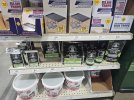
A visit to menards goes a long way. Repellant bags are a good start. D-con is also helpful when ground up and stirred into some peanut butter.
Squirrels, raccoons, rats and mice are very destructive. Mice are the worst. They get in the tiniest of places.
 

Attachments

  • Resized_20250928_163838.jpeg
    Resized_20250928_163838.jpeg
    3.4 MB · Views: 3

HarleyHappy

Senior Member
Joined
Sep 30, 2020
Messages
3,378
Location
So NH
Occupation
Welder/Mechanic
Wife has been collecting toilet paper tubes, with plans of filling them with peppermint soaked cotton balls.
I just buy the bags of poison pellets and pierce the bag and put them everywhere.
Need a new cat, our current 2 are too old to be mousers.
Dog does a better job at mousing than they do.
 
Top