• Thank you for visiting HeavyEquipmentForums.com! Our objective is to provide industry professionals a place to gather to exchange questions, answers and ideas. We welcome you to register using the "Register" icon at the top of the page. We'd appreciate any help you can offer in spreading the word of our new site. The more members that join, the bigger resource for all to enjoy. Thank you!

history of crawler tracks from their origins to the present day

trombeur

Senior Member
Joined
May 2, 2014
Messages
1,352
Location
italia
history of crawler tracks from their origins to the present day
508775113_24766821296240845_6609648493070258207_n.jpg

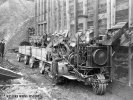
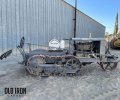
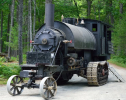
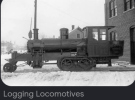
Hi, I'm passionate about heavy machinery. I wanted to know if it were possible to provide a historical timeline of tracks, crawlers, and self-propelled vehicles, from their origins to the first examples up to the present day. The technical evolution of steel-rubber tracks, the most significant models from both industrial archaeology and current models, is clearly diversifying from military self-propelled tracked vehicles to the most significant models, the earthmoving sector, and agriculture. Thanks, regards.
images


Welder Dave

Senior Member
Joined
Oct 11, 2014
Messages
18,167
Location
Canada
It would take too much text. The link you posted about track loaders doesn't seem to know the difference between loaders and dozers. All the pics. are dozers.
 

Tones

Senior Member
Joined
Mar 15, 2009
Messages
4,257
Location
Ubique
Occupation
Ex land clearing contractor, part-time retired
The truck with the transporter looks very familiar, can you post a better pic so I can see the signwriting?
 

Truck Shop

Senior Member
Joined
Dec 7, 2015
Messages
25,410
Location
WWW.
For early photos of crawlers used in agriculture and some construction this collection
of 1900 era farming will cover many early tracked concepts.
*
*
Casper ranch farming & harvest scenes (19).JPG
 

John C.

Senior Member
Joined
Jun 11, 2007
Messages
13,205
Location
Northwest
Occupation
Machinery & Equipment Appraiser
Crawler tracks are basically nothing more that a large chain with pads attached. The history of chain goes all the way back to Da Vinci and there are numerous adaptations and advancements to present day. There are plenty of histories that detail today's crawler chains starting with the Holt and Best saga at the beginning of the Caterpillar corporation.
I have a series of videos that describe the current state of tracked undercarriages on my YouTube Channel. The following link will get you to the excavator tracks.
 

trombeur

Senior Member
Joined
May 2, 2014
Messages
1,352
Location
italia
Holt tractor''?

Case-OK.jpg


Loyd-1-OK-480x480.jpg
Loyd-3-OK.jpg


The history of tracked vehicles begins with Benjamin Holt and the beginning of the last century. While this American inventor is credited with the first prototype of a commercial tracked tractor, we owe it to the Italian company FIAT, along with Caterpillar, that we are indebted for the development of the technology that made them essential in a wide variety of sectors. We asked Lorenzo Fermi, whose father already worked on Caterpillar machines, for information on today's tracks and their strategic role in any earthmoving or material handling job.

How has track technology evolved?
"Although conceptually they are no different from those of the early days, modern construction solutions today ensure increasingly reliable tracks, made from top-quality materials and capable of operating virtually anywhere. There are three specific variants to choose from depending on the work environment: the more traditional iron tracks, rubber tracks, or hybrid solutions with overpads for the former."

How do you know which is best?

Iron tracks are generally recommended for wooded areas and steep terrain, where the surface tends to be damp, slippery, or alternating between hard and softer, more slippery elements. Otherwise, on asphalt and flat areas in construction environments, rubber tracks are undoubtedly the best performers. Excellent vulcanization and specific compounds ensure long life, and thanks to advanced materials chemistry, they resist both scorching temperatures and the harsh winter weather. They even resist the vast majority of solvents. Perfect for small or medium-sized excavators, rubber tracks now represent almost all requests for new equipment and are the norm for rental supplies. Finally, one of the advantages of rubber tracks shouldn't be underestimated: its weight is particularly low compared to the 'monstrous' weight of iron tracks.

Then there's the option of over-pads...
"Exactly. Practical and efficient, they add all the agility and functionality of rubber to the already excellent grip of steel. Installation is extremely simple: simply bolt them onto the track (often to just one link in two), and thanks to recent quick-release clip systems, installation has become even easier. Anyone can do it themselves.

What maintenance or care is required to ensure the tracks are always in good condition?
"During routine maintenance, in addition to greasing and changing filters, the operator simply needs to use the belt tensioner. A track should never be too tight or too loose, and to ensure the correct level of tension, simply refer to the tolerance guidelines we provide at each service. By operating a small valve that can be tightened or loosened, the links are adjusted to the optimal distance. Finally, among the recommendations I can offer is to check the inside of the tracks, the side that runs on the drive wheels. If the outside can be damaged by impact or material, its wear may at most cause a little extra vibration. This isn't a big deal given the excavator's low speed. Conversely, if the wear occurs on the inside, due to one or more links being too loose, the track could fail.

And what if this were to happen?
"Since we can only operate on a fixed rotation, in many cases this would mean a machine downtime that would jeopardize the continuation of the worksite. However, with the excavator's own arm or the help of a second vehicle, this is something that fortunately can be resolved fairly quickly. The same applies to those who rely on our on-site service, which is now accustomed to providing prompt interventions of this type. However, the loss of a track clearly highlights the importance of proper preventative maintenance."

Holt had invented a steam-powered tractor to allow farmers to be more productive for longer and at a lower cost than horsepower. Holt was a prolific inventor and held more than 45 patents. The residents of Stockton, California, called him "Uncle Ben."

C.L. Best, for his part, had launched a small startup called the C.L. Best Gas Traction Co., which initially focused on making rubber-tired tractors. By the end of 1912, Best had a tracklayer ready for production, the C.L. Best Model 70, equipped with an engine designed by Best himself. Best's products soon began to be accompanied by the "Tracklayer Creed."

Holt had invented a steam-powered tractor to allow farmers to be more productive for longer and at a lower cost than horsepower. Holt was a prolific inventor and held more than 45 patents. The residents of Stockton, California, called him "Uncle Ben."

C.L. Best, for his part, had launched a small startup called the C.L. Best Gas Traction Co., which initially focused on making rubber-tired tractors. By the end of 1912, Best had a tracklayer ready for production, the C.L. Best Model 70, equipped with an engine designed by Best himself. Best's products soon began to be accompanied by the "Tracklayer Creed."
 

Truck Shop

Senior Member
Joined
Dec 7, 2015
Messages
25,410
Location
WWW.
This photo is of a Best tractor being demonstrated in Walla Walla in 1905. I showed this photo
to a online antique tractor page. A person replied asking year of photo, CL Best is the great
great uncle of person asking. They knew he came to Walla Walla circa 1905 but never had seen
this photo and identified him in the photo operating tractor. download (4).png
 

trombeur

Senior Member
Joined
May 2, 2014
Messages
1,352
Location
italia
Cleveland Cletrac Model H,Cleveland Cletrac Model H
?

The first tracked tractor in history, the Cleveland Cletrac Model H, was designed and built in the USA in 1917. It was equipped with a 20 hp, four-cylinder internal combustion engine, powered by petroleum or paraffin. In Europe, the forefather of tracked tractors was the English Blackstone Track Tractor, marketed starting in 1919. It had a three-cylinder, paraffin- or kerosene-fueled engine that developed approximately 25 hp. The first Italian tracked tractor was the Fiat 700 C, produced in 1932. It had a 30 hp petrol engine and was quite successful, thanks in part to the interest of the army, which had identified the new tractor as a valid alternative for moving mountain artillery, instead of mules. A smaller version (the Fiat 708 C, with an engine of only 20 hp) was used in the military campaigns in Somalia and Libya. In 1939, in the midst of the autarchic era, a historic tracked tractor appeared: the Fiat model "40," also known as the "Boghetto" after the engine designer, Professor Fortunato Boghetto from Valdobbiadene (TV). Its main feature, which made it a cutting-edge vehicle for its time (and even today...), was that the 40 HP engine was a multi-fuel engine, meaning it could burn any flammable fuel available: alcohol, gasoline, naphtha, diesel fuel, paraffin, palm oil, castor oil, animal oil, etc. In effect, it was a low-compression Otto cycle engine, with a cylindrical combustion chamber with a biconical opening arranged eccentrically and inclined with respect to the cylinder axis, almost simulating a Venturi tube. The fuel system was completed by an injector and a spark plug. With this configuration, the engine always operated with full air intake, and the fuel was metered so that, near the spark plug, the mixture was always rich enough to allow ignition. This ensured smooth engine operation and low fuel consumption. After the war, with the spread of diesel engines, the Boghetto engine was, as they say, "retired."

The golden age of Italian tracked tractors began, their spread significantly favored by the topography of Italian agricultural land, which is classified as 35% mountainous, 43% hilly, and 22% plain, often with clayey and tenacious soils. Moreover, a typically Italian practice, at least until the late 1970s, was plowing to a depth of 50-60 cm. The wheeled tractors of the time were not yet as large and stable on slopes as their tracked counterparts; This led to the widespread diffusion of these machines in our countryside, so much so that, to meet farmers' demand, between 1930 and 1970, over 30 manufacturers were active in Italy, with more than one hundred models of tracked vehicles adaptable to any production situation.

Today's reality

Nowadays, the number of domestic manufacturers of tracked tractors has greatly decreased, but the demand for these machines has never stopped: in fact, a full 9% of new registrations in 2019 were classic tracked tractors (i.e., with steel pads), making Italy one of the countries in the world with the highest use of these vehicles.

From a technical standpoint, thanks to their large ground contact surface and high power-to-weight ratio, classic tracked tractors are capable of developing excellent grip and therefore high tractive force. Furthermore, they provide good ground buoyancy (with an average ground pressure of only 0.25-0.50 kg/cm2), thus limiting compaction. They also offer excellent lateral stability thanks to their low center of gravity, smaller footprint compared to a similarly powered wheeled tractor, and a tight turning radius (in fact, they can pivot on the inner track).

Disadvantages include their lower ergonomics compared to wheeled models (although this aspect has been significantly improved in recent years), their limited suitability for certain operations (e.g., haymaking, crop maintenance, transport), their slow speed, and the need to attach special overshoes to the skids when traveling on public roads. The maximum speed permitted by the Highway Code is only 15 km/h. Consequently, these machines are by their very nature not very multifunctional; However, they prove to be a godsend when high tractive force and excellent stability are required, especially on slopes and heavy terrain.

Current classic tracked tractors feature impressive construction features, albeit to a lesser extent than wheeled models, that achieve a high level of technical performance.
 
Top