• Thank you for visiting HeavyEquipmentForums.com! Our objective is to provide industry professionals a place to gather to exchange questions, answers and ideas. We welcome you to register using the "Register" icon at the top of the page. We'd appreciate any help you can offer in spreading the word of our new site. The more members that join, the bigger resource for all to enjoy. Thank you!

Ford E450 Bucket Truck (Roberts Hydraulic) – 12V or 24V System? Rewiring After Battery Fire

Asignguy

Member
Joined
Apr 10, 2026
Messages
11
Location
Ontario Canada
Hey guys, looking for some experienced help on a bucket truck electrical setup.

I bought a 2010 Ford E450 with a Roberts Hydraulic Lift. Batteries were dead when purchased. Unhooked batteries without marking each one ne where to be hooked back to. DUH IS ME lol I then had a battery fire, but it was NOT a system fault(my fault idiot!) — a disconnected positive cable touched the metal battery holder while the batteries were unhooked.

I’m now trying to put everything back together exactly as it was, but I want to confirm whether this hydraulic motor runs on 12V or 24V before I hook anything up. One big question is... should the batteries be in series or parallel?


What I know / have:​

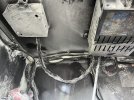
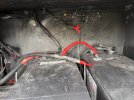
2 batteries in the box (See photo)
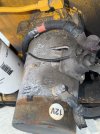
Hydraulic pump with solenoid (see photo)
IOTA DLS-27-25 charger (27.2V output) It was burned. I bought a new one but don't think I really need to install it as I won't need to plug truck in to charge the batteries at the shop. Driving and charging batteries off alternator should be enough to keep batteries charged the small amount I use it I beleive?
  • Vanner equalizer(see Photo)
  • Also has a 24 Volt Vanner inverter in Cab behind drivers seat Sorry only lets me upload 4 photos I have many more photos.

Note: I have limited knowledge on this but have taken this truck to two truck shops and they said they can't do it. I've scoured youtube for info and spent hours using AI. I also called the manufacturer. They said used a third party to wire the truck and they went out of business.

What’s confusing me:​

  • The IOTA charger outputs 27.2V, which suggests a 24V system
  • The Vanner equalizer also suggests 24V stepping down to 12V
  • BUT the pump motor has a “12V” marking on it
  • I’ve had a few people tell me they’ve never seen a 24V bucket setup

Original wiring (before fire):​


  • There were two MEGA fuse holders on the negative side (one per battery)
  • I’m replacing those cables
  • The rest of the wiring I’m trying to replicate

What I need help confirming:​


  1. Is this likely a 24V system or 12V?
  2. If 24V:
    • Would the batteries be wired in series (pos → neg jumper)?
  3. If 12V:
    • Would it be parallel (pos-pos / neg-neg)?
  4. Has anyone seen:
    • A Roberts Hydraulic setup like this?
    • A 24V hydraulic pump on a bucket truck?
I’m not redesigning anything — just trying to:


  • Reconnect it safely
  • Match the original configuration
  • Avoid damaging the pump or electronics
Appreciate any insight from guys who’ve worked on these.
I’m think I'm close — just want to be 100% sure before I hook power back up.
I'm still using my 2000 Ford Bell truck that is falling apart.
I've had the 2010 for three months and am getting tired of owning a 14000 lb paperweight! lol

Thanks so Much

Derek
 

Attachments

  • Jumper from pos to pos question thx.jpeg
    Jumper from pos to pos question thx.jpeg
    2.2 MB · Views: 12
  • lift motor.jpeg
    lift motor.jpeg
    1.5 MB · Views: 12
  • Equalizer.jpeg
    Equalizer.jpeg
    1.8 MB · Views: 11
  • contoller after fire.jpeg
    contoller after fire.jpeg
    4 MB · Views: 12

Mr. Wrench

Senior Member
Joined
Oct 23, 2025
Messages
373
Location
Ohio
Occupation
Mechanic
I don't know anything about those. With the pump saying 12V on it I would not want to put 24V to it, but that does not explain the 24V charger and converter.

You can post more pictures by posting them after the first post.
 

Simon C

Senior Member
Joined
Jul 1, 2015
Messages
2,993
Location
Rocky Mountain House , AB., Canada
Occupation
Heavy Equipment Mechanic
Hey guys, looking for some experienced help on a bucket truck electrical setup.

I bought a 2010 Ford E450 with a Roberts Hydraulic Lift. Batteries were dead when purchased. Unhooked batteries without marking each one ne where to be hooked back to. DUH IS ME lol I then had a battery fire, but it was NOT a system fault(my fault idiot!) — a disconnected positive cable touched the metal battery holder while the batteries were unhooked.

I’m now trying to put everything back together exactly as it was, but I want to confirm whether this hydraulic motor runs on 12V or 24V before I hook anything up. One big question is... should the batteries be in series or parallel?


What I know / have:​

2 batteries in the box (See photo)
Hydraulic pump with solenoid (see photo)
IOTA DLS-27-25 charger (27.2V output) It was burned. I bought a new one but don't think I really need to install it as I won't need to plug truck in to charge the batteries at the shop. Driving and charging batteries off alternator should be enough to keep batteries charged the small amount I use it I beleive?
  • Vanner equalizer(see Photo)
  • Also has a 24 Volt Vanner inverter in Cab behind drivers seat Sorry only lets me upload 4 photos I have many more photos.

Note: I have limited knowledge on this but have taken this truck to two truck shops and they said they can't do it. I've scoured youtube for info and spent hours using AI. I also called the manufacturer. They said used a third party to wire the truck and they went out of business.

What’s confusing me:​

  • The IOTA charger outputs 27.2V, which suggests a 24V system
  • The Vanner equalizer also suggests 24V stepping down to 12V
  • BUT the pump motor has a “12V” marking on it
  • I’ve had a few people tell me they’ve never seen a 24V bucket setup

Original wiring (before fire):​


  • There were two MEGA fuse holders on the negative side (one per battery)
  • I’m replacing those cables
  • The rest of the wiring I’m trying to replicate

What I need help confirming:​


  1. Is this likely a 24V system or 12V?
  2. If 24V:
    • Would the batteries be wired in series (pos → neg jumper)?
  3. If 12V:
    • Would it be parallel (pos-pos / neg-neg)?
  4. Has anyone seen:
    • A Roberts Hydraulic setup like this?
    • A 24V hydraulic pump on a bucket truck?
I’m not redesigning anything — just trying to:


  • Reconnect it safely
  • Match the original configuration
  • Avoid damaging the pump or electronics
Appreciate any insight from guys who’ve worked on these.
I’m think I'm close — just want to be 100% sure before I hook power back up.
I'm still using my 2000 Ford Bell truck that is falling apart.
I've had the 2010 for three months and am getting tired of owning a 14000 lb paperweight! lol

Thanks so Much

Derek
Here goes. Lets make this simple;

Start out by Paint pen marking the top of the batteries on the positive and negative terminals that have a ( +, - ) . Yellow is one of the best colours to use.

That electric motor on Hydraulic Pump is 12 Volts so don't send anything but that to it.

Your left side Battery in your picture has a big Red Cap covering one end that I can see with the screen zoomed in to be the Battery Positive post . There is another partially burnt Red cable going up from it to what looks like a breaker on the roof of the compartment with a blue wire on one side.
That cable can be easily replace with a 1/0 cable or so and done. The breaker itself may need to be changed and lots of them are available from any Cole Hersee dealer or Grote Dealer.

You have a box with IOTA written on cover that has burn wires on the bottom sticking out. Yes those will need to be replaced.

That Vanner 100 Amp Battery Equalizer is there because the system probably was pulling more power from one battery than another so you end up with one only half charged most of the time and the lift won't work right. That is my guess.

Battery Positive gets hooked to Battery Positive, and Battery Negative gets hooked up to Battery Negative.

So at least you made a mistake and admitted it. DO NOT work around batteries without disconnecting the negative first and putting one of those battery black plastic caps on it immediately. Then disconnect the other Negative battery post and put a Black cap on that one also. After doing that the other stuff can be touched or removed. When we learn to do things right we don't get bothered with bigger problems.

Fix anything that is simple first and go from there. Don't get into a mental state that it is too hard. Just do one thing at a time. This is a simple fix compared to some I have done, and you would save yourself some money by buying a good Cable Crimper or Cable Hammer Anvil with some welding cable and heat shrink.
Those shops that would not look at it have some less than adequate bosses or employees.

Hope this give you a good start.

Simon C
 

Simon C

Senior Member
Joined
Jul 1, 2015
Messages
2,993
Location
Rocky Mountain House , AB., Canada
Occupation
Heavy Equipment Mechanic
If they are using 24 volts off of those batteries, things will have to be hooked up differently or some 12 volt power will have to feed some Battery inverter that produces 24 volt to power something special.
Have a look on your crane for solenoids that are usually marked 12 volt or 24 volt. Then you will know.
Simon C
 

AMBMike

Senior Member
Joined
Jun 12, 2009
Messages
281
Location
Southeast KS
Occupation
Cat herder.
This is only a guess based on some systems I've seen and worked with but I'm thinking the whole 24 volt setup may be to run the 24v inverter while leaving the truck and hydraulic pump stock.
It's probably a cheaper way to do it compared to having a dedicated 24v battery bank for the inverter separate from the truck system, and, running the inverter on 24 volts allows you to get by with smaller batteries for a given inverter output load.

As @Simon C posted above check the rest of the electrical devices for the hydraulic system for any voltage markings. If they're all 12 volt you can be certain that it's a 12 volt system.

Also, replace any and all cables, wires, devices, and connections that have any heat damage. With the 12-24 volt system even relatively small loads pull fairly high amperage and anything degraded by the heat of the fire will be a weak point.

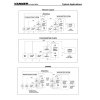
I'll attach a link to a place that sells the Vanner equalizer. If you click on the pictures you'll find basic wiring diagram for the device.


LCA078

Senior Member
Joined
Sep 29, 2019
Messages
718
Location
Austin, TX
That sucks you're dealing with a battery fire but we'll get you through this. No problem (other than time, money, patience, and busted knuckles)!!! And lots of good info so far from Simon and Mike.

You're on the right track by first identifying which components are 12v vs 24v. In the US military, most "modern" trucks use 24v to drive the starter and other high power systems but then use 12v for the dash/sensors/motor, etc. since all those non-starter parts are civilian parts just borrowed from the commercial truck industry. Since you have a Ford E450, my guess is the starter, alternator and motor/lights/etc are all 12V as is but I would verify by tracing the cables from the battery and looking for part numbers.

Make this simple by breaking this down into 4 buckets of what is 12v vs. 24v:
-Starter (pn should tell you)
-Alternator (pn should tell you)
-Motor/lights/dash gauges/etc systems
-Accessories and equipment (probably only thing 24v)

The easiest way to identify which parts use is look for where your two positive battery and two negative leads go. Do you remember what your 24v series jumper looked like? That's the short cable that connects one battery positive lead to the other battery negative lead for 24v series. Is it thick like a starter cable or thin like an accessory cable? That will help tell you the 24v load.

My concern is trying to understand why they had a battery equalizer and a 24v charger if the major components are 12v. First identify what systems were using 24v to determine if you even need those components (the previous owner may have had 24v accessories they removed before selling).

For your statement: "IOTA charger outputs 27.2V, which suggests a 24V system", be very careful here! Don't assume anything from a shop that went out of business (as that might explain why they went out of business). Tell us what was driving that charger (12v or 110VAC) to produce 24v and then what systems used 24v. You might be able to greatly simplify your wiring.

Edit: It's quite possible they used 24v to drive a small welder they took off the truck before selling and you may no longer need the 24v.
 
Last edited:

Asignguy

Member
Joined
Apr 10, 2026
Messages
11
Location
Ontario Canada
I don't know anything about those. With the pump saying 12V on it I would not want to put 24V to it, but that does not explain the 24V charger and converter.

You can post more pictures by posting them after the first post.

Here goes. Lets make this simple;

Start out by Paint pen marking the top of the batteries on the positive and negative terminals that have a ( +, - ) . Yellow is one of the best colours to use.

That electric motor on Hydraulic Pump is 12 Volts so don't send anything but that to it.

Your left side Battery in your picture has a big Red Cap covering one end that I can see with the screen zoomed in to be the Battery Positive post . There is another partially burnt Red cable going up from it to what looks like a breaker on the roof of the compartment with a blue wire on one side.
That cable can be easily replace with a 1/0 cable or so and done. The breaker itself may need to be changed and lots of them are available from any Cole Hersee dealer or Grote Dealer.

You have a box with IOTA written on cover that has burn wires on the bottom sticking out. Yes those will need to be replaced.

That Vanner 100 Amp Battery Equalizer is there because the system probably was pulling more power from one battery than another so you end up with one only half charged most of the time and the lift won't work right. That is my guess.

Battery Positive gets hooked to Battery Positive, and Battery Negative gets hooked up to Battery Negative.

So at least you made a mistake and admitted it. DO NOT work around batteries without disconnecting the negative first and putting one of those battery black plastic caps on it immediately. Then disconnect the other Negative battery post and put a Black cap on that one also. After doing that the other stuff can be touched or removed. When we learn to do things right we don't get bothered with bigger problems.

Fix anything that is simple first and go from there. Don't get into a mental state that it is too hard. Just do one thing at a time. This is a simple fix compared to some I have done, and you would save yourself some money by buying a good Cable Crimper or Cable Hammer Anvil with some welding cable and heat shrink.
Those shops that would not look at it have some less than adequate bosses or employees.

Hope this give you a good start.

Simon C
 

Asignguy

Member
Joined
Apr 10, 2026
Messages
11
Location
Ontario Canada
Hi Simon. Thanks so much. More photos attached. Solenoids are 12V. I've attached more photos
 

Attachments

  • batteries with info.jpg
    batteries with info.jpg
    1.7 MB · Views: 8
  • 120 to power IOTA Dont hink Im reinstalling.jpeg
    120 to power IOTA Dont hink Im reinstalling.jpeg
    1.6 MB · Views: 8
  • Solenoids.jpeg
    Solenoids.jpeg
    1.4 MB · Views: 8
  • two mega fuses.jpeg
    two mega fuses.jpeg
    4.3 MB · Views: 8

Asignguy

Member
Joined
Apr 10, 2026
Messages
11
Location
Ontario Canada
This is only a guess based on some systems I've seen and worked with but I'm thinking the whole 24 volt setup may be to run the 24v inverter while leaving the truck and hydraulic pump stock.
It's probably a cheaper way to do it compared to having a dedicated 24v battery bank for the inverter separate from the truck system, and, running the inverter on 24 volts allows you to get by with smaller batteries for a given inverter output load.

As @Simon C posted above check the rest of the electrical devices for the hydraulic system for any voltage markings. If they're all 12 volt you can be certain that it's a 12 volt system.

Also, replace any and all cables, wires, devices, and connections that have any heat damage. With the 12-24 volt system even relatively small loads pull fairly high amperage and anything degraded by the heat of the fire will be a weak point.

I'll attach a link to a place that sells the Vanner equalizer. If you click on the pictures you'll find basic wiring diagram for the device.

Thank You!
 

Asignguy

Member
Joined
Apr 10, 2026
Messages
11
Location
Ontario Canada
Here goes. Lets make this simple;

Start out by Paint pen marking the top of the batteries on the positive and negative terminals that have a ( +, - ) . Yellow is one of the best colours to use.

That electric motor on Hydraulic Pump is 12 Volts so don't send anything but that to it.

Your left side Battery in your picture has a big Red Cap covering one end that I can see with the screen zoomed in to be the Battery Positive post . There is another partially burnt Red cable going up from it to what looks like a breaker on the roof of the compartment with a blue wire on one side.
That cable can be easily replace with a 1/0 cable or so and done. The breaker itself may need to be changed and lots of them are available from any Cole Hersee dealer or Grote Dealer.

You have a box with IOTA written on cover that has burn wires on the bottom sticking out. Yes those will need to be replaced.

That Vanner 100 Amp Battery Equalizer is there because the system probably was pulling more power from one battery than another so you end up with one only half charged most of the time and the lift won't work right. That is my guess.

Battery Positive gets hooked to Battery Positive, and Battery Negative gets hooked up to Battery Negative.

So at least you made a mistake and admitted it. DO NOT work around batteries without disconnecting the negative first and putting one of those battery black plastic caps on it immediately. Then disconnect the other Negative battery post and put a Black cap on that one also. After doing that the other stuff can be touched or removed. When we learn to do things right we don't get bothered with bigger problems.

Fix anything that is simple first and go from there. Don't get into a mental state that it is too hard. Just do one thing at a time. This is a simple fix compared to some I have done, and you would save yourself some money by buying a good Cable Crimper or Cable Hammer Anvil with some welding cable and heat shrink.
Those shops that would not look at it have some less than adequate bosses or employees.

Hope this give you a good start.

Simon C
Hey,

My plan was to not re install the IOTA charger. If I understand it correctly the Charger is only to charge batteries while truck is plugged into 110 after long batteries usage. It's rare that I use the lift enough to kill batteries. Alternator charge while driving should be ok. I suspect they charge while driving via alternator and vehicle battery is protected from dying by isolator?

The large red jump cable looks like it only fits from Pos to Neg. When hooking that up even with the vehicle battery disconnected I get a spark/small snap? Is that normal? That freaked me out a little. After reading all the responses I think I'm going to buy some cable and connectors and replace some more heated wire?
 

Asignguy

Member
Joined
Apr 10, 2026
Messages
11
Location
Ontario Canada
Could the batteries be hooked up in series(24v) going to the inverter that converts to 120 for the use of laptops etc in the truck. And have a wire that sends 24 volt to the Equalizer that equalizes to 12V to the pump motor/solenoids?
Sadly its extremely difficult to follow/trace the wires.
 

AMBMike

Senior Member
Joined
Jun 12, 2009
Messages
281
Location
Southeast KS
Occupation
Cat herder.
My concern is trying to understand why they had a battery equalizer and a 24v charger if the major components are 12v.
I know nothing about this particular truck.
Where I lived and worked, and before cordless tools became common, many tradesmen would install a large inverter in their trucks and power their saws, drills, air compressors, etc with that rather then using a gas powered generator.

A 24 volt inverter was most common and many would run it off of a dedicated battery bank that got recharged overnight at the shop from a 24 volt charger permanently mounted in the truck. This had the benefit of simplicity and eliminated the risk of killing your starting batteries. It also provided a source to jump the starting battery should it die.

Some would use a 12/24 volt setup similar to the one in this thread to try to save some upfront cost. This setup saves on battery costs and allows the truck alternator to help charge the batteries but adds complexity and the risk of the truck not starting at the end of the day. This setup would get charged at the shop overnight as well to ensure the batteries would last a full day.


Some wider angle photos of the battery setup, engine bay, and the entire truck may help jog some memories here.
 

AMBMike

Senior Member
Joined
Jun 12, 2009
Messages
281
Location
Southeast KS
Occupation
Cat herder.
Could the batteries be hooked up in series(24v) going to the inverter that converts to 120 for the use of laptops etc in the truck. And have a wire that sends 24 volt to the Equalizer that equalizes to 12V to the pump motor/solenoids?
Sadly its extremely difficult to follow/trace the wires.
Are these batteries in the engine bay or truck body? And how are they connected to the truck batteries.

My guess is the wanted to run a 24 volt inverter and the standard 12 volt hydraulics.
 

Simon C

Senior Member
Joined
Jul 1, 2015
Messages
2,993
Location
Rocky Mountain House , AB., Canada
Occupation
Heavy Equipment Mechanic
If you hook up that large Red cable from one battery Positive to the Negative of the other battery, the output of the batteries will be 24 Volts on the cable that goes upwards.

It is highly unlikely that the power to recharge your batteries comes direct from the alternator. I have done some that way with a large 6 gauge cable right to the batteries and it works best . What you have is probably too small of wire to recharge batteries while driving home, hence they plug in a charger every night.

Whether or not you have a 24 volt inverter to power up tools is only a guess for me. Maybe draw a picture with the batteries and cables that go here or there and maybe we can comment better.
Simon C
 

AMBMike

Senior Member
Joined
Jun 12, 2009
Messages
281
Location
Southeast KS
Occupation
Cat herder.
Could the batteries be hooked up in series(24v) going to the inverter that converts to 120 for the use of laptops etc in the truck. And have a wire that sends 24 volt to the Equalizer that equalizes to 12V to the pump motor/solenoids?
Sadly its extremely difficult to follow/trace the wires.
1775920899459.jpeg
Check out these diagrams for the Vanner equalizer. The "tour charter coach" is most likely the closest to your setup.

The equalizer simply keeps the battery's charges equal. 12 volt loads drawing off of a 24 volt system will drain one battery which leads to unequal charging and poor battery life.

My guess, and without seeing the system it's only a guess, is that if you didn't need the 24 volt inverter you could wire the batteries in parallel, that is positive to positive and negative to negative, remove the equalizer, and everything would work well.
 
Last edited:

Simon C

Senior Member
Joined
Jul 1, 2015
Messages
2,993
Location
Rocky Mountain House , AB., Canada
Occupation
Heavy Equipment Mechanic
Yours may be a 24 Volt output battery box, but your truck will be only a 12 volt output alternator so the Tour/Charter Coach wiring will not fly.
Your battery box could feed to Invertor but has to not backfeed truck 12 volt system or there will be problems.
You need to find out exactly where every single cable goes and tag it so you don't forget and then draw it out is my suggestion for not being there.
Simon C
 

Simon C

Senior Member
Joined
Jul 1, 2015
Messages
2,993
Location
Rocky Mountain House , AB., Canada
Occupation
Heavy Equipment Mechanic
Don't you worry, I could show you a couple wrenches from when I was you that did some heavy welding, kind of learned there had to be smarter ways to do things. Not born knowing this stuff.
Simon C
 
Top