the one thing I think Caterpillar nailed right with the hightrack is the angle of the lift rams . Nightmare to build sweeps for by the looks though . Fella retiring from a life time of contracting I bought some scrub rolling gear off said of the hightrack D4 that there's a hole to pull the transmission out of , real easy to work on and as he said it needed it . It also said of his Komatsu's that they are hard to work on but don't need much . Another point he was uncomplimentary on was the over-heating on the D4 , he said it was transmission related . He had fitted in front of the existing radiator another to simply lift cooling capacity that fixed the problem . Local D4E has an overheating problem to . Every thing has been pulled apart and checked to no avail , same capacity problem with the added disadvantage of not listening to those who can give them help .
-
Thank you for visiting HeavyEquipmentForums.com! Our objective is to provide industry professionals a place to gather to exchange questions, answers and ideas. We welcome you to register using the "Register" icon at the top of the page. We'd appreciate any help you can offer in spreading the word of our new site. The more members that join, the bigger resource for all to enjoy. Thank you!
You are using an out of date browser. It may not display this or other websites correctly.
You should upgrade or use an alternative browser.
You should upgrade or use an alternative browser.
Why does Caterpillar use high tracks?
- Thread starter MikeyJP1980
- Start date

stars&bars44
Well-Known Member
The compact track loaders have the Cat high track design.
Hi D11RCD, Thank you , it was the best professional comment , what I hear.Heya folks,
I've been curious about this for quite a few years now so I've spoken to many people about as well as having read up on the issue. Incidentally we are doing transmissions systems at TAFE and so I have access to quite some literature regarding this exact topic. Here's my 2c.
The main reason is that a high track machine's final drives are isolated from impacts and shock loadings, improving final drive life. Additionally the final drive unit is not rolling around literally "in" the dirt/mud/dust. Because majority of our contaminates in earthmoving enter through seals etc it makes very good sense to lift this component up and have it out of the dirt. Again, less wear is the goal here.
Secondly, when we consider the machine's balance (ignoring blade and ripper, and only taking into account the tractor) the main machine weight is over the tracks, not on the rear. This gives significantly better traction (allegedly, I'm a fitter not an operator). Obviously if it had a giant blade and no ripper it would be forward heavy, or a giant ripper and small blade would be rear heavy. Common sense prevails- balance the weight of your blade with something on the back. Furthermore the track frame can then be extended forward of the machine, rearward or both depending on the configuration. XL configuration has the front idler more forward than standard, XR has the rear idler extended rearwards and LGP has the idler in the same position as XR, while extending the front idler further than even the XL configuration. Because you can't shift around the final drive of an oval track machine this gives greater "from factory" customisation.
From a serviceability standpoint being able to remove the transmission through the rear is certainly an advantage worth noting. Any way to improve serviceability is always going to save money in the long run over a machine's lifetime. Does this outweigh the additional undercarriage wear from having two idlers? That's for the bean-counters to figure out but we must keep in mind that a high track machine has more track plates to spread the wear around. Personally I cannot understand seeing any high track without a carrier roller but they are around... All that does is increase the track wear as it whips over the large space, especially at higher tractor speeds.
From a physics standpoint we would lose some power because an oval track is pulling the track over itself in the same plane as the track is driving the ground. A high track is pulling it around and idler and then to the ground on a different plane so it's impossible that some energy isn't lost.
I hope you all find this interesting, I've always wanted to be able to contribute to this sort of discussionIf you want me to post pictures of some of the diagrams and paragraphs in my texts then I'm more than happy to oblige

Nige
Senior Member
It was not much more than a cut & paste from what Cat produced about 50 years ago when they introduced the high drive on what was then known as the D10 but is now the D11.Hi D11RCD, Thank you , it was the best professional comment , what I hear.
Hello Nige, I was born in those years. I didn't know the history.
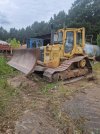
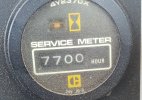
This summer I also managed to get a good condition D4H from Germany.
(The running gear needs to be completely replaced) but the machine is in good technical condition. Can you perhaps get information about its history? 9DB04323
This summer I also managed to get a good condition D4H from Germany.
(The running gear needs to be completely replaced) but the machine is in good technical condition. Can you perhaps get information about its history? 9DB04323
Attachments

td14steve
Well-Known Member
I remember reading that CAT summary of the change over to the high drives, back in the late 70s. Saw one of the early D10s in Salt Lake City mist have been around 1978. Boy am I getting old!
HarleyHappy
Senior Member
My first look at a high track Cat was in the late 70’s and they were unloading 2 of them, maybe 6’s. They were Army green and it was the Engineering Corps. They drove into the Exeter river that is now my backyard.
They drover them down the river, one staggered behind the other, clearing trees and beaver damns.
It was then labeled a State River and they put dams in, all the way to the Great Bay/ocean.
Me and my brother followed them all the way around our property.
That turned it into a first class trout river for 40 years.
They drover them down the river, one staggered behind the other, clearing trees and beaver damns.
It was then labeled a State River and they put dams in, all the way to the Great Bay/ocean.
Me and my brother followed them all the way around our property.
That turned it into a first class trout river for 40 years.
I always wondered why vs std track. The big track loaders are std trackThe compact track loaders have the Cat high track design.
masterwelder
Senior Member
Build date is 1990-09-05Hello Nige, I was born in those years. I didn't know the history.
This summer I also managed to get a good condition D4H from Germany.
(The running gear needs to be completely replaced) but the machine is in good technical condition. Can you perhaps get information about its history? 9DB04323
Last edited:
masterwelder
Senior Member



Shimmy1
Senior Member
II especially like how they changed to high track, claimed it was the best thing since sliced bread, and 20 years later switched back......
Nige
Senior Member
High drive seem to work better when the machine is equipped with bogie-suspended undercarriage. AFAIK that is D8 models and up.

Welder Dave
Senior Member
If a dozer was used a lot would have to consider downtime and ease of repairs. I thought that was a big feature of high track dozers along with less shock load on the final drives.
HarleyHappy
Senior Member
High track dozers have their place but they will never push reasonably dry material, like a regular track dozer.
They do offer some advantages for light grading, better sight line, usually do better in boggy conditions.
Unfortunately the new and used prices for decent machines are almost double that of a regular track dozer.
They do offer some advantages for light grading, better sight line, usually do better in boggy conditions.
Unfortunately the new and used prices for decent machines are almost double that of a regular track dozer.

Why would they struggle pushing dry material? I have a D6T XL VPAT and it does not struggle at all. Between the D6N and D8R that I ran for probably at least 10k hours, I really liked the high drive. I ran a D5M for a while but didn't care for it on side slopes, but it had the finger clutch disengagement and was miserable with the gap between declutch and brake.High track dozers have their place but they will never push reasonably dry material, like a regular track dozer.
They do offer some advantages for light grading, better sight line, usually do better in boggy conditions.
Unfortunately the new and used prices for decent machines are almost double that of a regular track dozer.
Last edited:

CM1995
Administrator
- Joined
- Jan 21, 2007
- Messages
- 16,021
- Location
- Alabama
- Occupation
- Running what I brung and taking what I win
High track dozers have their place but they will never push reasonably dry material, like a regular track dozer.
They do offer some advantages for light grading, better sight line, usually do better in boggy conditions.
Unfortunately the new and used prices for decent machines are almost double that of a regular track dozer.
Not so sure about that. Rented a D8R for 3 months on a project back in the mid 2000's and that was one dirt hogging SOB. Loved the fuel but man would it push.
Material was a very abrasive chert with boulders. Same project we wore the pads out on a D6N at 500 hours - no joke.
Shimmy1
Senior Member
Only thing I've found for sure to be true, a high track will not back up a steep slope as well as a standard track. Comparisons are 7H vs. D68, 8R vs. D155, and 6N vs. D61.
Hmmm..........
Maybe it's a Komatsu thing.......
Hmmm..........
Maybe it's a Komatsu thing.......
Welder Dave
Senior Member
Does the high track want to dig in instead of climbing or doesn't have enough power? I know the County I was in preferred a Komatsu for pushing over D6N or JD. They said they could just boil the blade on the Komatsu and keep pushing. They bought the Cat though. About a $100K discount because it was for gov't. but another reason was rebuilt exchange components were thousands cheaper than having to buy new.
Oh yeah , once the rev's are up they do . Very quickly and on risky ground a bit hairy . Quite nimble the 155's for their size .Only thing I've found for sure to be true, a high track will not back up a steep slope as well as a standard track. Comparisons are 7H vs. D68, 8R vs. D155, and 6N vs. D61.
Hmmm..........
Maybe it's a Komatsu thing.......
The late model D7E could have had its drive anywhere and Caterpillar chose the oval design , says a lot.